By the MiamiPermitAI team · July 7, 2026 · Updated September 30, 2026
Sealed Plans and Permit Submission: Miami-Dade Guide

Sealed plans are officially signed and stamped architectural or engineering drawings that certify a project meets all applicable building codes and structural standards. The role of sealed plans in permit submission is not optional in Miami-Dade County. Building departments require sealed plans signed and dated by a licensed Florida architect or engineer before they will issue any permit. Without that seal, even a technically perfect set of drawings is legally invalid for submission.
What types of sealed plans are required for permits?
Miami-Dade building permits require different types of sealed plans depending on the scope of your project. The Miami-Dade Building Department recognizes five primary plan categories, and most mid-to-large projects require more than one.
Architectural plans cover the overall layout, dimensions, materials, and design intent of a structure. Structural plans address load-bearing elements, foundations, and connections. Mechanical plans document HVAC systems. Plumbing plans cover water supply, drainage, and gas lines. Electrical plans show panel locations, circuits, and load calculations. Each of these must carry the seal of a licensed Florida professional in that discipline.

| Plan type | Typical project triggers |
|---|---|
| Architectural | New construction, additions, interior reconfigurations |
| Structural | Foundation work, load-bearing wall changes, roof framing |
| Mechanical | New HVAC systems, duct modifications |
| Plumbing | New fixtures, re-piping, gas line additions |
| Electrical | Panel upgrades, new circuits, service changes |
A bathroom remodel that moves plumbing and adds a new circuit requires both plumbing and electrical sealed plans. A room addition triggers architectural, structural, and often mechanical plans. Most structural, drainage, electrical, or plumbing changes require professional sealing, even on residential properties. Many contractors assume small residential jobs are exempt. That assumption causes delays.
Pro Tip: Check the Miami-Dade Building Department’s project-specific checklist before hiring any professional. Knowing which plan types you need upfront prevents you from paying for the wrong scope of work.
Why sealed plans matter for permit approval
A professional seal does more than satisfy a bureaucratic checkbox. Professionals who place seals accept full legal responsibility for design accuracy and safety. That accountability is exactly why building officials treat sealed plans differently from unsealed drawings.
The practical benefits are direct:
- Faster reviews. Sealed plans allow permit reviewers to spend less time on revisions because code compliance is confirmed upfront.
- Fewer rejection cycles. A sealed plan set signals that a licensed professional has already caught errors before submission.
- Legal protection. If a structural failure occurs, the licensed professional who sealed the plans carries liability. That protection extends to the homeowner and the contractor.
- Credibility with reviewers. Plan reviews involve multiple departments verifying zoning, safety, and code compliance. Sealed documentation gives every department a clear, authoritative reference.
A common misconception is that sealed plans are only for large commercial projects. Miami-Dade enforces sealed plan requirements on many residential projects, including additions, structural repairs, and system replacements. Skipping the seal to save money on professional fees almost always costs more in delays and resubmissions.
Pro Tip: Hire your architect or engineer before finalizing your project scope. Getting the seal right from the start is far cheaper than revising plans after a rejection.
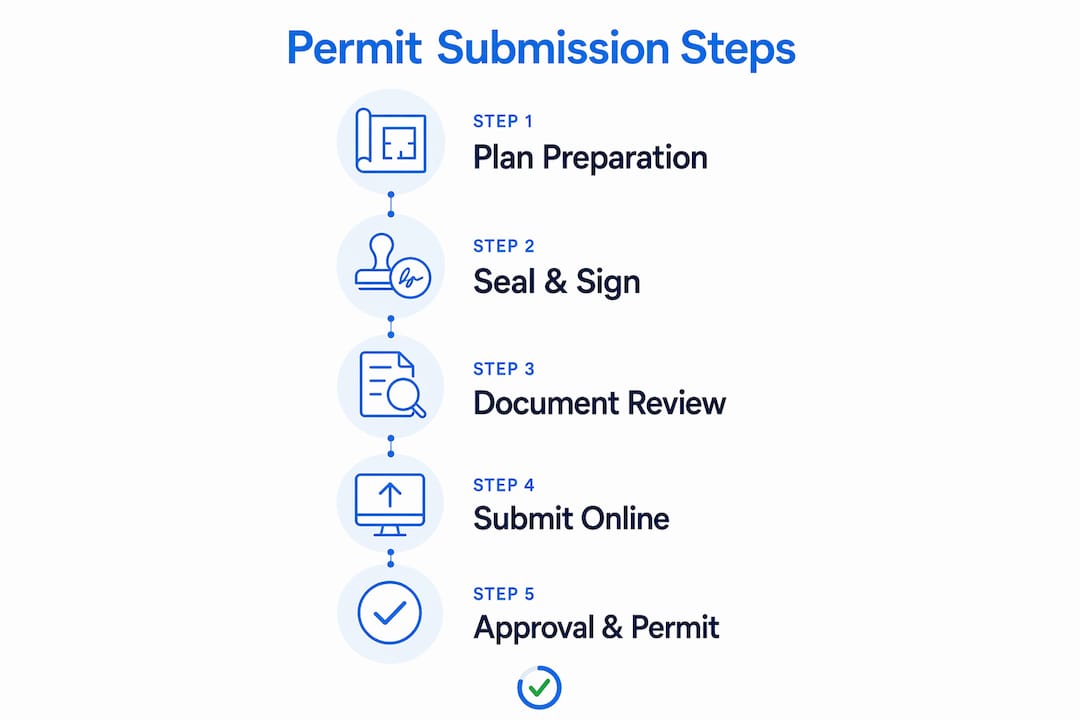
How to submit sealed plans in Miami-Dade: step by step
The sealed plans approval process in Miami-Dade follows a defined sequence. Knowing each step prevents the most common submission errors.
- Hire a licensed Florida professional. Verify your architect or engineer holds an active Florida license through the Florida DBPR (Department of Business and Professional Regulation). An expired or out-of-state license invalidates the seal.
- Confirm all required plan types. Review the Miami-Dade Building Department’s project checklist and confirm which disciplines require sealed drawings for your specific permit category.
- Prepare the full plan set. Each sheet must carry the professional’s seal, signature, and date. Even minor omissions like an unsigned page can invalidate the entire plan set legally, requiring full resubmission.
- Choose your submission channel. Miami-Dade accepts electronic submissions through its online permitting portal. Florida Statute 471.025 authorizes electronic PE seals, so digital submission with an electronic seal is legally valid. Physical submission is still accepted but adds processing time.
- Submit with all supporting documents. Permit applications must include all required plans, signatures, seals, and supporting documents to avoid stoppages. Missing a single supporting form can halt the entire review.
- Respond to review comments promptly. If a reviewer flags an issue with your sealed plans, your licensed professional must address it and resubmit with an updated seal. Do not attempt to correct sealed drawings yourself.
- Track your permit status. After submission, monitor the review status through Miami-Dade’s public records portal so you can respond to any requests without delay.
Pro Tip: Before hitting submit, print every sheet and physically verify that each page carries the seal, signature, and date. Digital files can lose embedded seals during conversion. One missing seal on one sheet can stop the entire application.
The timeline from submission to approval varies by project complexity. Simple projects with complete, properly sealed plans typically move through review faster than complex projects with incomplete documentation. Homeowners should acquire sealed plans early to prevent rejection and costly delays.
Common mistakes with sealed plans that delay permit approval
Most permit rejections tied to sealed plans fall into a small set of repeatable errors. Knowing them in advance is the fastest way to avoid them.
- Missing or incomplete seals. Missing signatures or seals are the most common cause of immediate permit rejection. A plan set missing even one seal on one sheet is invalid.
- Using an unlicensed or out-of-state professional. Florida requires a Florida-licensed architect or engineer. A seal from another state does not satisfy Miami-Dade requirements.
- Assuming residential exemptions apply. Contractors often overlook that sealed plans are required not only for new construction but for many renovation and site alteration projects. Verify your project’s requirements before assuming you are exempt.
- Submitting outdated plan versions. If your design changed after the professional sealed the original set, the updated sheets need a new seal. Submitting a mix of sealed and unsealed revisions creates a legally inconsistent package.
- Ignoring Miami-Dade-specific requirements. Miami 21 zoning rules, FEMA flood zone requirements, and local building code amendments add layers beyond the Florida Building Code. A plan sealed by a professional unfamiliar with Miami-Dade specifics may still fail local review.
You can check common permit rejection reasons in Miami-Dade to see how sealed plan errors rank against other submission failures. The pattern is consistent: documentation errors, not design errors, cause most rejections.
Pro Tip: Ask your architect or engineer to provide a written checklist confirming every sheet is sealed, signed, and dated before you take possession of the plan set. Make this a standard part of your professional agreement.
Key Takeaways
Sealed plans are a legal requirement in Miami-Dade, and submitting a complete, properly sealed package is the single most reliable way to avoid permit rejection.
| Point | Details |
|---|---|
| Sealed plans are legally required | Miami-Dade requires licensed Florida professionals to sign and seal all applicable drawings before permit issuance. |
| Multiple plan types may apply | Projects involving structural, plumbing, electrical, or mechanical work each require discipline-specific sealed plans. |
| Seals accelerate reviews | Reviewers spend less time on sealed applications because code compliance is pre-verified by a licensed professional. |
| Missing seals cause full rejection | Even one unsigned page invalidates the entire plan set and requires complete resubmission. |
| Electronic seals are valid in Florida | Florida Statute 471.025 authorizes electronic PE seals, making digital submission legally acceptable in Miami-Dade. |
Common ways sealed plan submissions go wrong
One of the most expensive mistakes homeowners and contractors make is treating the seal as an afterthought. They finalize the design, negotiate the contract, and then scramble to find a licensed professional to stamp whatever drawings already exist. That sequence almost always produces problems.
The seal is not a rubber stamp. A licensed professional who takes their liability seriously will review the drawings before sealing them. If those drawings have problems, the professional will require revisions. That takes time. If you are already close to a construction start date, those revisions create real financial pressure.
The contractors who move fastest through Miami-Dade permitting bring their licensed professionals into the project at the design stage, not the submission stage. The architect or engineer shapes the drawings from the start, which means the sealed plan set reflects their actual review, not a post-hoc approval of someone else’s work. That difference shows up in review speed and rejection rates.
For homeowners unfamiliar with sealed plan requirements, the most practical first step is to contact the Miami-Dade Building Department directly and ask which plan types your specific project requires. Get that answer in writing. Then hire your professionals based on that confirmed scope. Do not rely on a contractor’s verbal assurance that sealed plans are not needed. Verify it yourself.
The seal represents a licensed professional’s legal commitment to the accuracy of the design. Building officials know that. Treat it with the same seriousness they do.
How Miamipermitai helps you get sealed plans right before you submit
Submitting a permit package with missing or incorrect sealed plans is one of the most avoidable reasons for rejection in Miami-Dade. Miamipermitai reviews your full permit package against Miami-Dade requirements before you submit to the county, flagging missing seals, unsigned pages, and documentation gaps that reviewers will catch.
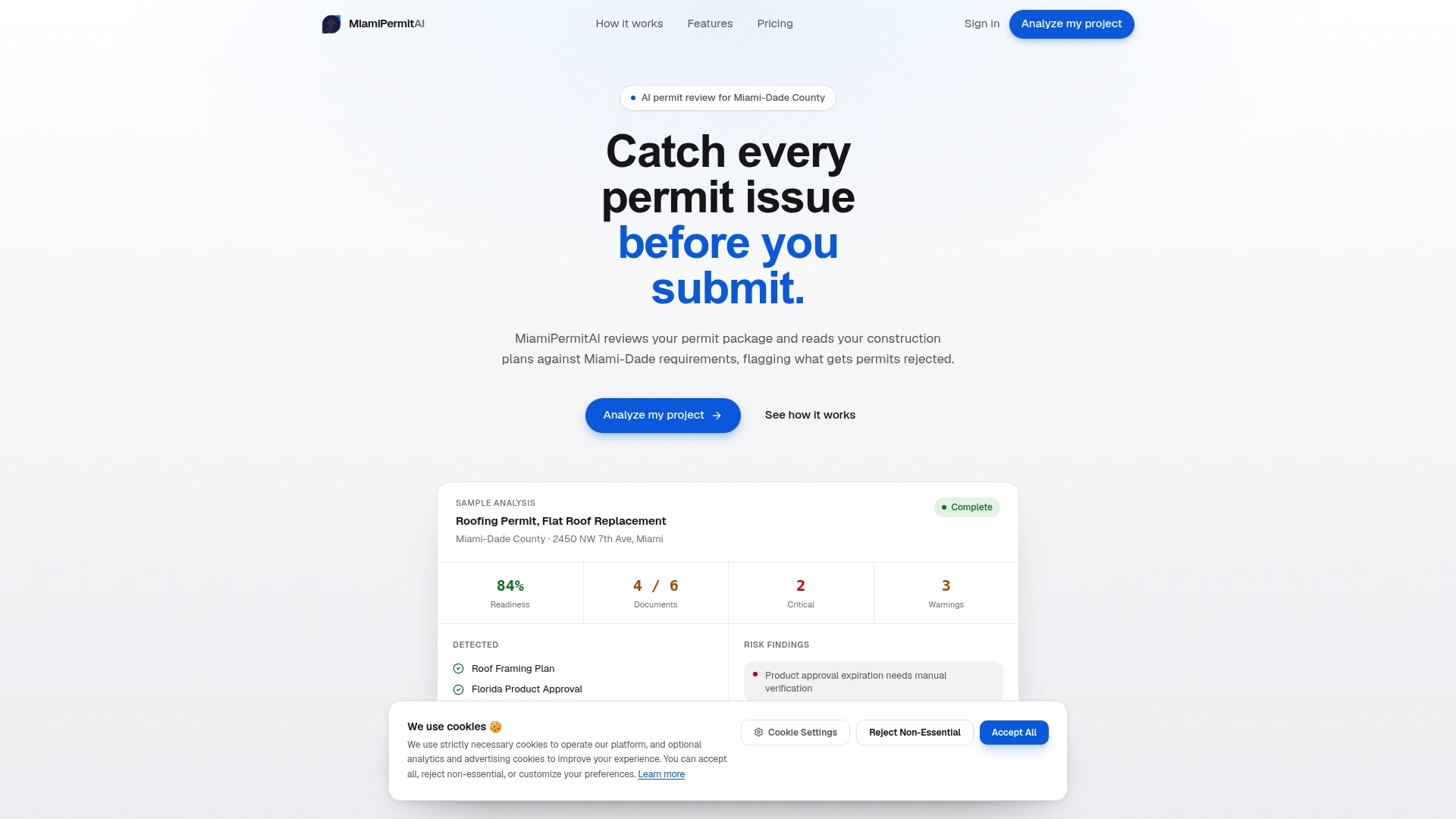
The platform checks your plans against Miami 21 zoning, FEMA flood zone rules, and Florida DBPR contractor license records. You get a clear readiness score and a plain-language list of what to fix. After you submit, Miamipermitai tracks your permit through approval and sends you status updates by email. Check your permit package before submission and go in with confidence.
FAQ
What are sealed plans for a building permit?
Sealed plans are architectural or engineering drawings signed, stamped, and dated by a licensed Florida professional. They certify that the design meets applicable building codes and are legally required for most Miami-Dade building permits.
Do residential projects in Miami-Dade require sealed plans?
Yes. Most residential projects involving structural, electrical, plumbing, or mechanical changes require sealed plans from a licensed Florida professional. Assuming a residential exemption without confirming it with the Miami-Dade Building Department is one of the most common causes of permit rejection.
Can I submit sealed plans electronically in Miami-Dade?
Yes. Florida Statute 471.025 authorizes electronic professional engineer seals, and Miami-Dade accepts digital plan submissions through its online permitting portal. Verify that your electronic files retain the embedded seal before uploading.
What happens if my sealed plans are missing a signature?
A single missing signature or seal on any sheet invalidates the entire plan set. The application will be rejected, and you will need to resubmit a corrected package with all pages properly sealed and signed.
How do sealed plans speed up the permit approval process?
Sealed plans confirm code compliance upfront, which reduces the time reviewers spend requesting revisions. Applications with complete, properly sealed documentation move through multi-department review faster than incomplete submissions.
Recommended
Is your permit package ready?
Run an AI readiness check against Miami-Dade requirements before you submit.
Start your first projectThis article is general guidance and not legal, engineering, or official county advice. Always verify requirements with Miami-Dade County before submitting a permit.