
June 30, 2026
Top 5 jwitkinpermits.com Alternatives for 2026
Top 5 jwitkinpermits.com Alternatives for 2026
Choosing building permit review software that matches unique project needs and local codes often wastes time and creates avoidable delays. Many platforms force subscriptions, limit jurisdiction coverage, or demand workflow changes that do not fit every office. This guide shows price models, code support, and workflow differences across five alternatives so contractors and offices can pick a better match without surprise roadblocks.
Table of Contents
MiamiPermitAI
At a Glance
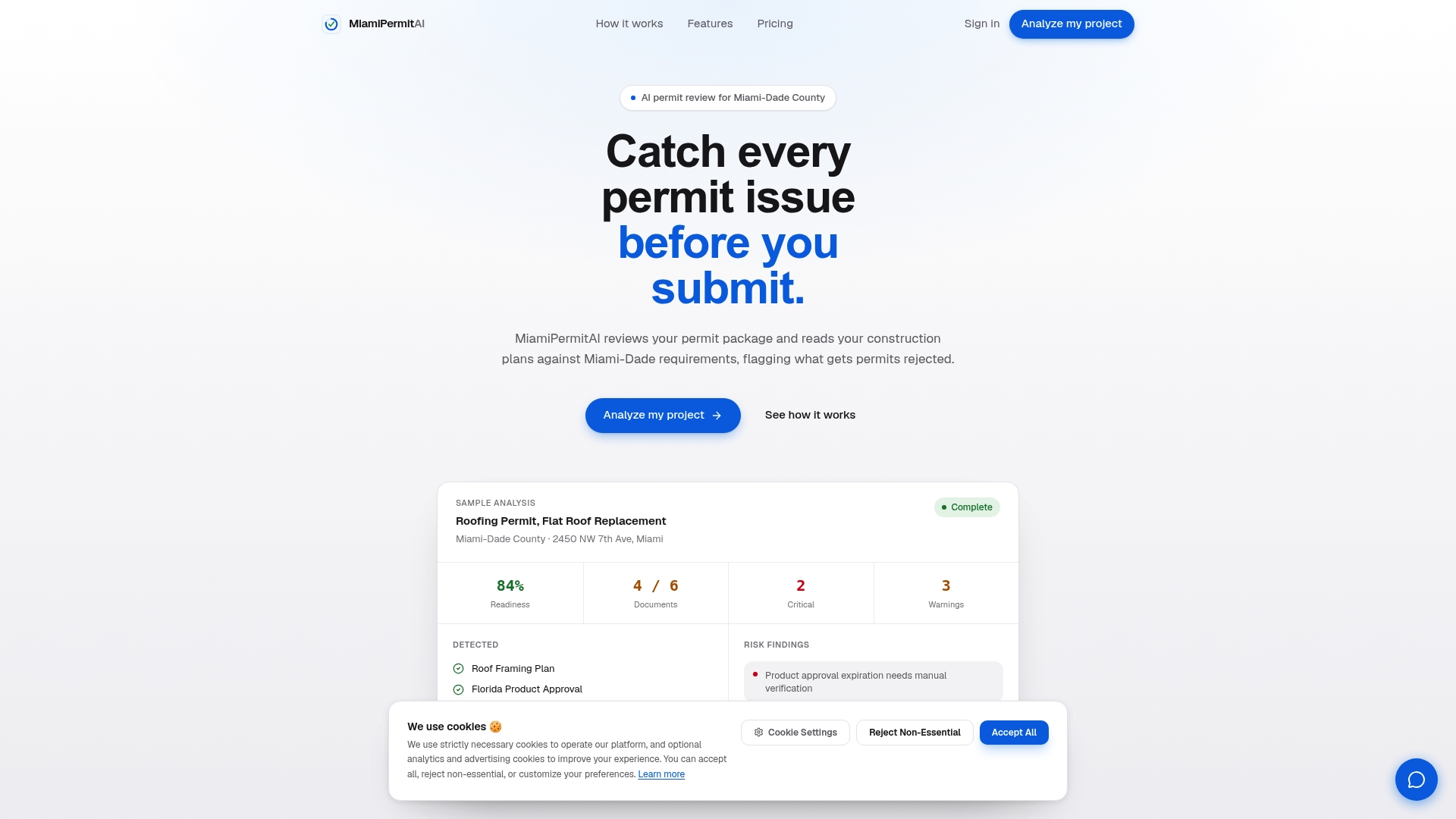
The service charges a $300 one-time payment for a full permit readiness review that includes zoning and contractor license checks. It flags missing documents, plan inconsistencies, and the issues that commonly cause Miami-Dade permit rejections. After you submit to the county, the platform tracks the permit through approval and sends email status updates.
Core Features
MiamiPermitAI runs an AI plan and document review calibrated to Miami-Dade requirements and validates document completeness against local checklists. The platform performs Miami 21 zoning checks, FEMA flood zone and elevation checks, and Florida Building Code checks for structural, electrical, plumbing, and mechanical items while verifying contractor licenses against Florida DBPR records. Users receive a submission readiness score plus plain-language fix recommendations and permit status alerts by email.
Key Differentiator
The product is specifically calibrated to Miami-Dade County requirements. That focus lets the review match local zoning language and county filing expectations rather than generic state rules. For contractors and property owners who file in Miami-Dade, the calibration reduces noise from irrelevant checks and narrows recommendations to locally enforceable items.
Pros
Specialization in Miami-Dade zoning and code checks reduces the number of irrelevant findings other general tools produce. The combination of permit readiness scoring, red-flag detection for common rejection causes, and clear step-by-step fixes helps you prioritize corrections before you file. Tracking the permit with public Miami-Dade records and sending email updates keeps the job site and office informed without constant manual lookups.
Cons
- Limited to Miami-Dade County; not suitable for permit work in other jurisdictions.
Who It’s For
Contractors and property owners preparing building permits in Miami-Dade who want a single preflight check before they file. General contractors, roofing contractors, and small developers who must match Miami 21 zoning and FEMA rules will find the output directly relevant. It also fits offices that prefer a one-time fee rather than ongoing subscriptions.
Unique Value Proposition
Every review is grounded in Miami 21 zoning, FEMA flood zone data, folio property records, and Florida DBPR contractor license verification. That data linkage lets the tool translate plan checks into local filing actions and deliver a readiness score with concrete, county-focused fixes. The practical result is fewer predictable corrections and clearer next steps for the person submitting the permit.
Real World Use Case
A roofing contractor uploads sealed plans and supporting documents for a reroof permit. The AI highlights a missing affidavit, a setback mismatch with Miami 21, and an unchecked DBPR license issue, and it lists the exact documents to add. The contractor fixes the items, files with the county, and watches permit status updates arrive by email.
Pricing
MiamiPermitAI uses a single $300 one-time payment for the readiness review and permit tracking features. That model removes recurring software fees and lets a small contractor budget the review as a line item per project. There is no public tiering or subscription pricing listed.
Website: https://miamipermitai.com
CodeComply
At a Glance
The vendor reports a 30% reduction in permit review time after a municipal deployment. CodeComply combines automated code checks with collaboration tools and revision comparison to catch issues before submission. This entry is a practical alternative for contractors and reviewers seeking faster reviews among jwitkinpermits.com alternatives.
Core Features
CodeComply runs automated code checks across ICC, NFPA, ADA, FHA, and local amendments and flags likely noncompliance. The platform includes comment threads, annotations, notifications, and VersionVue for side by side revision comparison. It also produces compliance reports and custom assessments that map issues to formal resolution pathways.
Key Differentiator
CodeComply ties automated checks into a full review workflow from initial plan validation to final approval. The system routes issues into structured resolution steps and preserves an audit trail for each revision. Unlike Miamipermitai, which centers on Miami‑Dade readiness and local datasets, CodeComply targets broader AEC workflows and integrates standard code families across jurisdictions.
Pros
CodeComply helps teams find code problems early, which reduces back and forth during formal reviews. Its collaboration layer keeps comments and annotations attached to specific plan locations, making reviewer intent easy to follow. The platform covers multiple code sets and produces exportable compliance reports, which saves time on manual cross referencing for designers and building officials. Version comparison keeps revision history clear and cuts confusion during resubmittals.
Cons
- Initial setup and staff training can take time. Some teams reported a steep learning curve.
- Pricing for larger teams may grow costly, and enterprise contracts can require negotiation.
- AI checks can produce false positives or false negatives, so manual verification remains necessary.
When It May Not Fit
If your office must rely exclusively on Miami‑Dade specific zoning, flood zone, or folio lookups, this product may feel broader than necessary. Smaller sole practitioners who need only simple checklist validation will likely find the platform more capability than they need. Teams that cannot allocate training hours up front may see limited ROI during the first months.
Who It’s For
Design professionals, plan reviewers, and building officials who handle multi code jurisdictions will get the most value. Architectural firms and engineering shops that submit frequent permit packages will benefit from version tracking and compliance reports. Cities that want to modernize reviewer collaboration across multiple departments also fit this profile.
Real World Use Case
A city building department rolled out CodeComply to automate code checks and standardize review responses. The vendor reports that deployment produced a 30% reduction in permit review time, and that figure simplified scheduling and reduced resubmittals. Review staff used VersionVue to compare revisions and to keep a clear audit trail for appeals.
Pricing
CodeComply offers flexible plans with a license option starting at $250/month for single users. Enterprise tiers use custom pricing that scales with seat count and additional modules. Specific enterprise pricing details are available from the vendor.
Website: https://codecomply.ai
ViaPermit
At a Glance
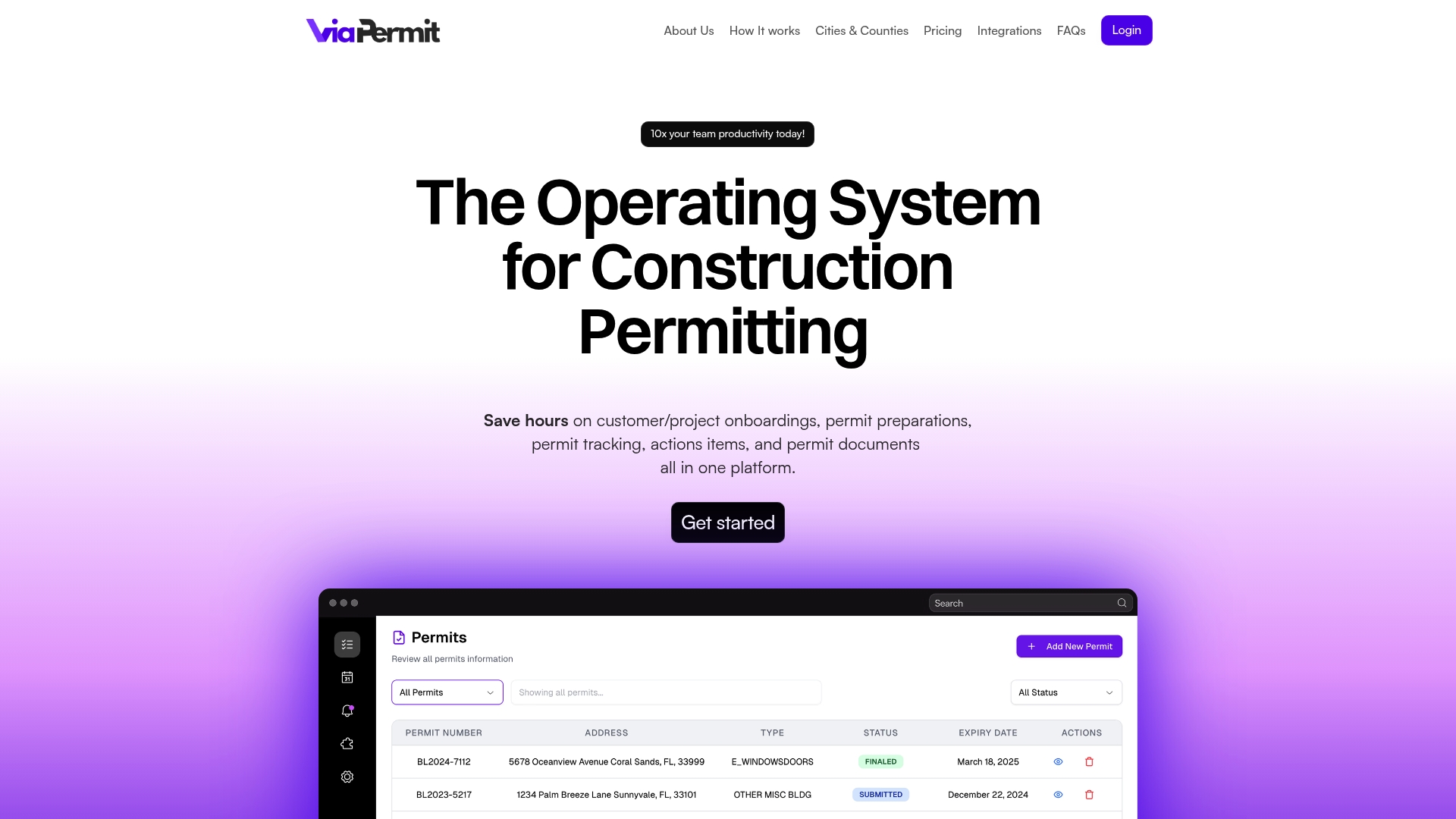
ViaPermit reports support for jurisdictions across 50 U.S. states and advertises limitless integrations. The vendor positions the system as a cloud based operating system for permit preparation and tracking. It targets expediters, contractors, architects, and project teams who handle permits in multiple cities. The interface emphasizes notifications and centralized document control.
Core Features
ViaPermit combines collaborative permit preparation with document upload and milestone tracking into a single workspace. The system offers customizable notifications for permits, inspections, and approvals, plus real time permit progress tracking. Plans scale by project volume and team size, and the product materials highlight broad integration capability with other tools.
Key Differentiator
The vendor highlights nationwide jurisdiction coverage alongside real time updates and broad integration options as the product’s primary edge. That nationwide support is the differentiator for teams running permits in several states. For multi state contractors and development firms, that reach aims to cut the overhead of juggling different city portals and rules.
Pros
ViaPermit reduces manual file chasing and centralizes permit milestones, so teams keep a single source of truth for each project. Its notification controls help project managers and subcontractors stay aligned on inspections and approvals without constant status meetings. The platform’s stated support for all U.S. jurisdictions and scalable plans suits firms that manage many permits across municipalities.
Cons
- Platform effectiveness may vary by local compliance and individual jurisdiction workflows. This can leave gaps in workflow automation.
- Pricing may feel high for very small teams or infrequent users. The vendor lists a $50/month entry plan and higher tiers.
- Public materials provide limited detail about technical support response times and onboarding assistance.
When It May Not Fit
If your work is limited to a single municipality, a lighter permit tracker or direct county portal may be a better fit. Small contractors who file only one project per year could find subscription fees hard to justify. Teams requiring documented, hands on onboarding or guaranteed response SLAs should verify support terms before committing.
Who It’s For
Construction companies, permit expediters, and regional contractors who file permits across multiple jurisdictions will benefit most. Architects and engineers working on multi city development projects gain from centralized document control. Project managers who need notification rules and milestone visibility across teams will find the platform useful.
Real World Use Case
A regional contractor managing projects in several states uses ViaPermit to gather sealed plans, assign reviewers, and push status alerts to field crews. The contractor tracks milestone completion for each permit and reduces duplicate uploads to different city portals. Teams report fewer missed inspection windows and clearer handoffs between office and site.
Pricing
ViaPermit uses scalable subscription plans that range from an entry level $50/month to enterprise tiers up to $1,000/month. Pricing varies by project volume and required features, so larger firms should request a custom quote for enterprise needs.
Website: https://viapermit.com
Swiftbuild.ai
At a Glance
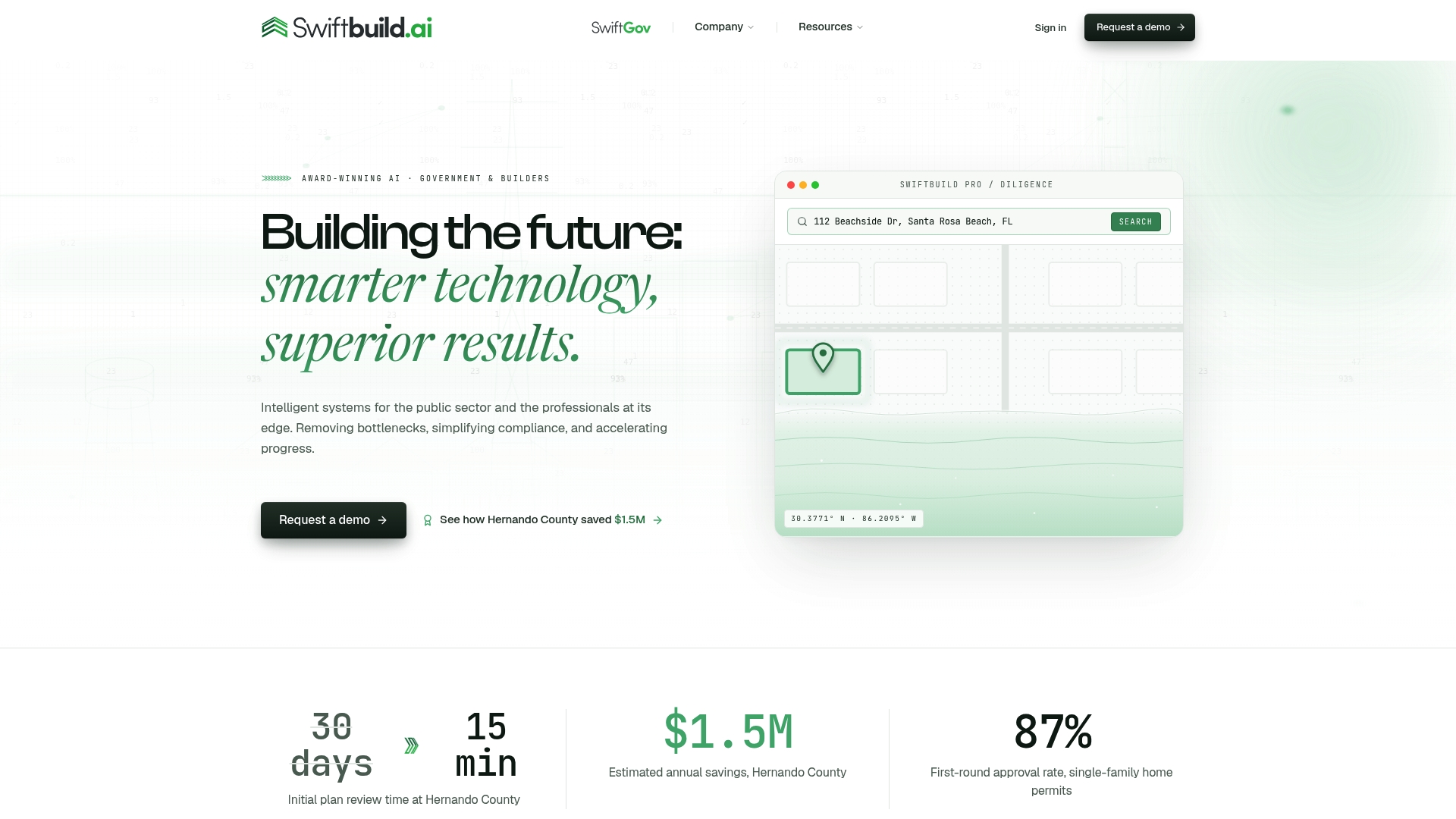
Swiftbuild.ai reports permit reviews as short as 15 minutes and claims jurisdictions save up to $1.5M annually. The company targets public sector planning and permitting workflows and emphasizes security, accessibility, and responsible AI governance. The offering focuses on automating intake, consolidating legacy systems, and reducing manual review steps.
Core Features
Core capabilities include AI-assisted permitting and automated intake processing that flag compliance issues before an application reaches the county queue. The system can be configured to map local codes and approval steps so reviews follow municipal rules and priorities. SwiftGov consolidates legacy tools and supplies decision support to staff who manage plan review and land use cases.
Key Differentiator
The single distinguishing feature is AI-native infrastructure tuned to local codes and workflows. That setup runs automated checks at scale while keeping results aligned with jurisdictional priorities. For Miami-Dade contractors and permit clerks, the focus means more consistent checks and fewer surprises at submission.
Pros
That reduction to short reviews and the vendor savings estimate support faster approvals and lower operating costs for development departments. Improved review consistency appears across intake and plan checks, which reduces back-and-forth with applicants. Staff capacity can increase without adding headcount, which helps during storm recovery or when permit volumes spike.
Cons
- Manual review requirement: not appropriate where law forces paper or human-only decisions.
- Low-volume jurisdictions: the implementation effort may not pay back for agencies with few permits.
- Initial setup: mapping local regulations and approval workflows takes staff time and vendor configuration.
When It May Not Fit
This solution fits where digital workflows and automation readiness exist. It does not fit jurisdictions that must perform manual reviews by statute. Small jurisdictions with limited permit traffic may see little operational return on the setup work.
Notable Integrations
No third-party connectors are listed. The vendor describes the product as an integrated, proprietary system with platform-level functionality rather than off-the-shelf connector support. Agencies should plan for data migration and single-vendor integration work.
Who It’s For
Local government agencies and departments responsible for land use, planning, and building permit review make up the primary audience. The product suits counties and municipalities aiming to shorten review queues, reduce corrections, and increase staff throughput without new hires. It also matches agencies prioritizing accessibility and responsible AI governance.
Real World Use Case
According to the company, Hernando County reduced permit review times from 30 days to 15 minutes, saved over $1.5M annually, and received national recognition for innovation. That deployment shows how the product can speed post-disaster rebuilding reviews and free staff for higher value tasks. The case illustrates the platform when a jurisdiction invests in configuration and digital intake.
Pricing
Not applicable — informational only. The vendor does not publish standard public pricing. Procurement will likely follow a government contracting process with scope, implementation, and licensing negotiated per jurisdiction.
Website: https://swiftbuild.ai
Permittable.ai
At a Glance
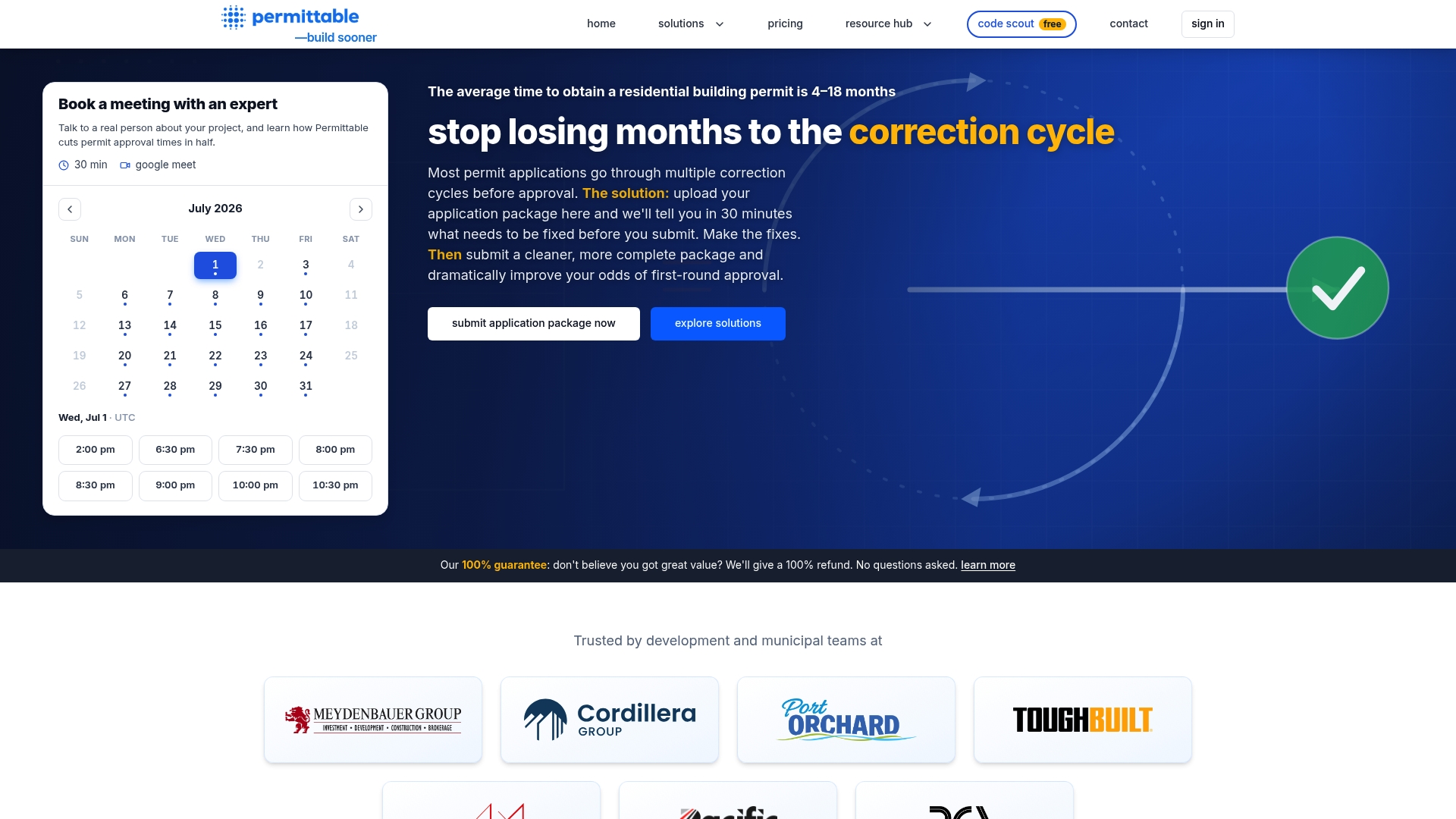
Permittable.ai’s marketing materials state its jurisdiction specific code checks reach >99% accuracy. The platform converts native CAD and PDF drawings into a digital model and runs automated compliance checks against local building, fire, and zoning codes. That approach targets fewer plan review cycles and clearer pre submittal fixes for architects, developers, and municipal reviewers.
Core Features
The engine creates a digital twin from CAD or PDF files and performs AI powered plan review that cites code references for flagged items. According to the company, the product can yield time savings up to 85% and cost reductions averaging $85,000 per project. The system also learns from reviewer comments and performs automated permit audits aimed at raising first pass approval rates.
Key Differentiator
Permittable.ai centers on improving first pass permit approval through AI driven code checks and a feedback loop that incorporates reviewer comments. That focus narrows the product toward teams that want fewer review cycles and clearer, citation backed fixes before submission. The platform emphasizes project readiness rather than post submission tracking.
Pros
The product flags code violations with cited references, so engineers and reviewers see exactly what to fix and where. Its learning model reduces repeated mistakes in resubmittals, which supports faster reviews over time. The vendor advertises a 100% money back guarantee, which may reduce purchase risk for firms testing the workflow. Native ingestion of CAD and PDF files speeds file handling for design teams.
Cons
- Buyer reviews indicate the platform can still require manual checks for unusually complex or bespoke systems. This means an experienced reviewer may still need to confirm edge cases.
- Functionality is limited to North American jurisdictions with supported local codes. Projects outside that scope will not get the same coverage.
- The system depends heavily on the quality and completeness of input drawings. Poorly labeled plans reduce automated accuracy and increase manual follow up.
When It May Not Fit
If your projects use jurisdictions outside North America this will not meet local code coverage needs. Teams that lack consistent CAD or PDF drawing standards will see degraded results from the model. Organizations that need an out of the box integration with existing project management tools may face extra workflow work to connect the product.
Notable Integrations
- Native CAD/PDF drawing ingestion for quick plan import and model creation.
Who It’s For
Architects, engineers, developers, and municipal permit review teams that want to cut review cycles and clarify code fixes before submission. The product suits regional builders and design firms working inside supported North American jurisdictions. It fits teams prepared to standardize drawing quality for automated review.
Real World Use Case
The vendor reports a regional homebuilder reduced first round permit rejections by 90%, cut approval time from months to weeks, and saved over $25,000 per project. That example shows how the product can impact repeatable homebuilding workflows when drawings are consistent and local codes are covered.
Pricing
Permittable.ai uses a pay per report model with flat rates per analysis pack. Pricing varies by project size and scope and the company does not offer subscription plans according to the product description.
Website: https://permittable.ai
Comparison of alternatives
For permit filing in Miami-Dade County, miamipermitai.com delivers locally precise reviews few competitors match. Meanwhile, CodeComply, ViaPermit, Swiftbuild.ai, and Permittable.ai each address specific needs for professionals across varying workflows and jurisdictions.
Regional Precision vs. Broader Coverage
MiamiPermitAI specializes in reviews tailored to Miami-Dade County. Its calibrated checks for local zoning and building codes streamline compliance by focusing exclusively on requirements applicable to this region. ViaPermit contrasts this with coverage spanning all 50 U.S. states, supported by flexible subscription plans suitable for teams working across multiple municipalities. This makes ViaPermit a strong choice for multi-state contractors seeking a unified platform.
Automation and Review Efficiency
Swiftbuild.ai emphasizes reduced processing times with AI-powered checks configured to jurisdictional priorities. This approach suits agencies requiring immediate evaluations during peak filing periods. Permittable.ai, on the other hand, features CAD and PDF-based digital modeling for pre-submission plan reviews, enhancing first-pass approval rates. For teams preparing detailed engineering submissions, Permittable.ai may provide the clarity needed for faster results.
Best fit
- Miami professionals resolving county requirements: MiamiPermitAI for precise zoning and building code validation.
- Multi-state contractors seeking jurisdiction coverage: ViaPermit for unified permit tracking across multiple states.
- Offices managing multiple projects: CodeComply for its collaborative review tools and configurable workflows.
- Single-focus developers preferring fixed pricing: Permittable.ai for flat-rate pre-submission compliance checks.
Our pick
MiamiPermitAI’s direct calibration to Miami-Dade codes makes it the ideal solution for contractors and offices focused on local permit requirements. Its features reduce unnecessary corrections and ensure a straightforward filing process. However, for firms needing jurisdictional integration beyond Miami-Dade, ViaPermit remains the choice for nationwide permit management.
Here is a comparison of building permit software tools, focusing on unique features and pricing structures to support your selection process.
| Product | Core Feature | Key Differentiator | Pricing | Notable Limitation |
|---|---|---|---|---|
| Miamipermitai | AI-powered permit readiness review | Specialization in Miami-Dade County requirements | $300 one-time | Limited to Miami-Dade County jurisdiction |
| CodeComply | Full review workflow with code validation | Routing issues into structured resolution steps | $250/month | Initial steep learning curve and manual checks required |
| ViaPermit | Nationwide jurisdiction support | Real-time updates and broad integration options | Starts at $50/month | Lower effectiveness in jurisdictions with unique processes |
| Swiftbuild.ai | AI-assisted intake and planning review | AI infrastructure mapped to local codes | Price not published | Requires significant initial setup for effective implementation |
| Permittable.ai | Digital twin for compliance checks | Feedback loop for improved first submission accuracy | Pay-per-report | Limited to North American jurisdictions for coverage |
Choosing the Right Permit Review Tool for Miami-Dade Projects
If you are a contractor or property owner focused on Miami-Dade building permits, finding the right jwitkinpermits.com alternative can make all the difference. Common issues like missing documents, zoning conflicts with Miami 21, and contractor license verifications slow down permit approval and cause costly delays. Miamipermitai tackles these challenges by providing a clear readiness score, pinpointing exactly what needs correction before you submit to the county.
Key benefits include:
- Local code compliance checks based on Miami-Dade zoning, FEMA flood zones, and Florida contractor licensing
- Tracking your permit status with email updates directly from public county records
- A one-time $300 review fee without recurring subscriptions
Learn how Miamipermitai can reduce permit rejections and accelerate approvals for your next project. Visit Miamipermitai to get your permit package ready with confidence.
Check your readiness now at Miamipermitai
FAQ
How does Miamipermitai help with permit readiness?
Miamipermitai generates a comprehensive permit readiness score based on document completeness and compliance with local regulations. It features an AI plan and document review, including checks for Miami 21 zoning, FEMA flood zones, and building codes. Contractors and property owners can ensure they meet readiness criteria before filing their permits.
What is the difference between CodeComply and Miamipermitai?
CodeComply excels in combining automated code checks with a full review workflow, enhancing collaboration among teams while addressing multi-code jurisdictions. Miamipermitai specifically tailors its review tools to Miami-Dade requirements, which benefits those focusing solely on this area.
Can I use Miamipermitai if I need support for multiple jurisdictions?
No, Miamipermitai is limited to Miami-Dade County, making it less suitable for permits in other regions. It provides targeted support for Miami-specific zoning and code checks, benefiting users who exclusively operate in that area.
Which platform is better for tracking permit submissions—Miamipermitai or ViaPermit?
ViaPermit offers centralized document control and milestone tracking across jurisdictions, catering well to teams managing permits in multiple locations. Miamipermitai shines in Miami-Dade, providing a detailed readiness review but lacks the multi-jurisdictional integration.
How does the pricing of Miamipermitai compare to its competitors?
Miamipermitai charges a single one-time payment of $300 for its readiness review and tracking features. This compares to CodeComply’s starting price of $250/month, which may add up for frequent users needing continuous access to the system.
Recommended
Is your permit package ready?
Run an AI readiness check against Miami-Dade requirements before you submit.
Try your first analysis freeThis article is general guidance and not legal, engineering, or official county advice. Always verify requirements with Miami-Dade County before submitting a permit.